
Overview
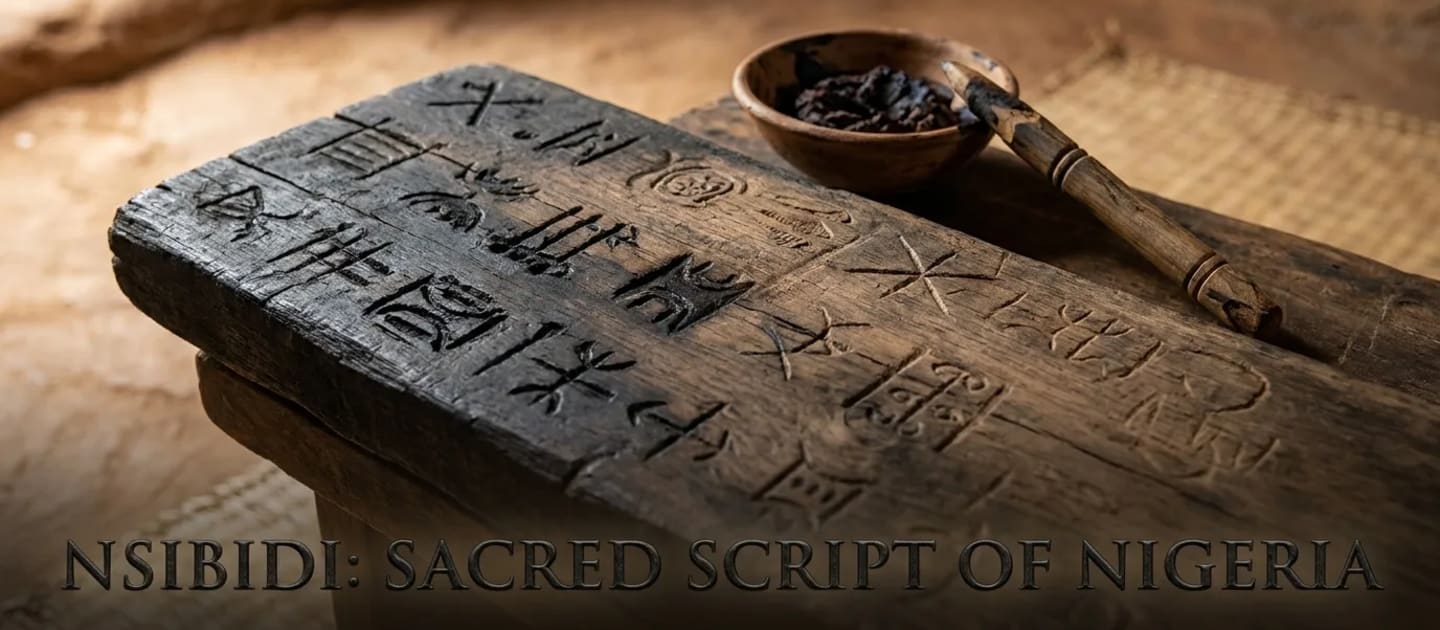
Nsibidi is a system of graphic signs used in the Cross River region of south-eastern Nigeria, among the Efik, Ibibio and neighbouring peoples of Cross River State and Akwa Ibom State. The signs were drawn, incised, painted on bodies and walls and made with the hands, and many of their meanings were restricted to initiates.
Origin and history
Nsibidi is documented from the nineteenth century by traders, missionaries and colonial officials in the Cross River area, and it is understood to be considerably older. Its use was closely bound to men's associations, above all the Ekpe society, whose grades controlled particular signs. The system travelled with people taken through the Atlantic slave trade, and related sign traditions are recorded in Cuba. Its everyday use narrowed through the colonial period as literacy in Roman script spread, but signs remain in ceremonial and design use, and artists and designers draw on them today.
Materials and techniques
Signs were drawn in charcoal, chalk, dye or pigment, incised into calabash, wood, brass and pottery, painted on cloth and on the walls of society houses, and traced in the air or on the ground with hand gestures. Individual signs stand for objects, actions, relationships and ideas, and are combined to convey a message rather than spelled out sound by sound. Some signs were public; others were reserved for those initiated to a particular grade.
Cultural significance
Nsibidi carried legal and social weight. Signs were used to record agreements, mark judgements, communicate between society members and convey messages that outsiders could not read, and their control by graded associations tied literacy in the system directly to authority. Because a large part of the corpus is restricted knowledge, published interpretations of specific signs are incomplete and sometimes contested, and this page does not attempt to translate restricted signs.
Notable examples
Ekpe society signs
Signs tied to the grades of the Ekpe association, many of them restricted to initiates.
Ukara cloth
Indigo-dyed cloth patterned with nsibidi signs, associated with Ekpe membership.
Wall and shrine drawings
Signs painted or incised on society houses and ritual spaces.
Connected history and culture
The association that has carried the system is covered on the Ekpe page, and the signs were incised on the gourds described under calabash carving.