
Overview
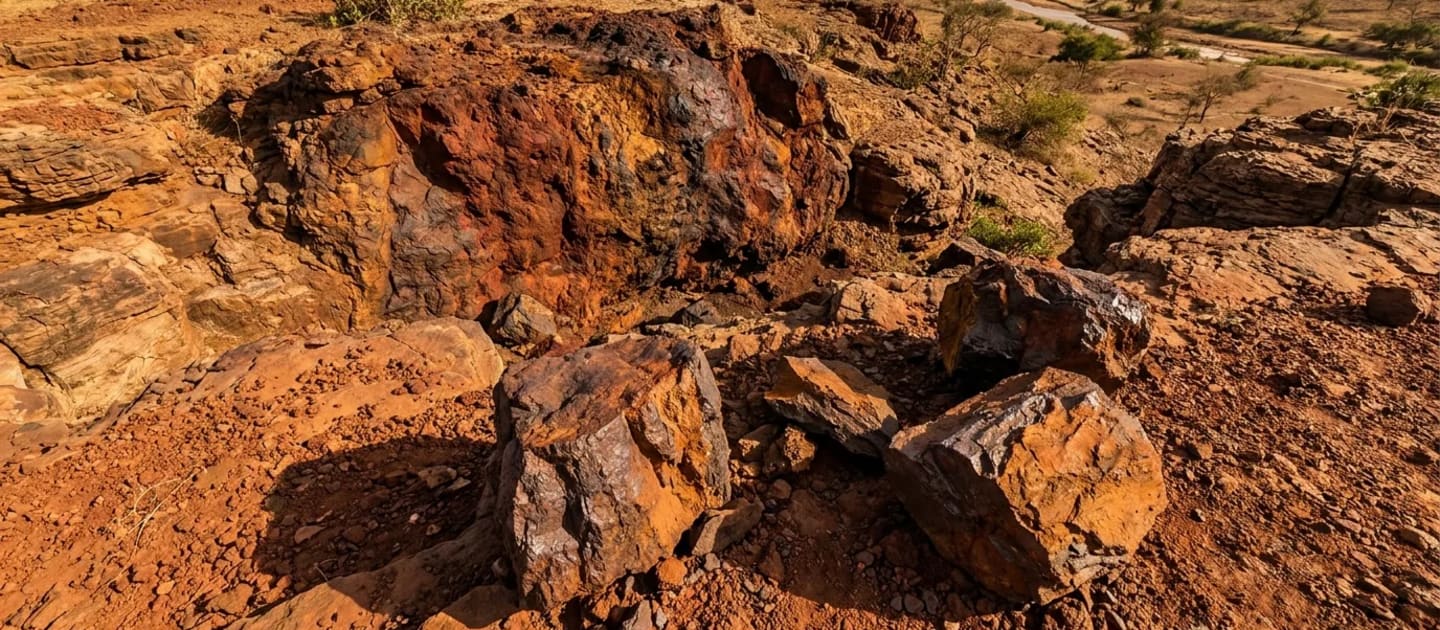
Iron ore is the resource on which Nigeria's attempt to build an integrated steel industry rested. The deposit at Itakpe in Kogi State was developed from the late 1970s to feed the steel complex at Ajaokuta, a project whose incomplete history is now inseparable from the ore itself.
Where it's found
The principal worked deposit is at Itakpe, near Okene in Kogi State, in the north-central zone, with further iron-bearing formations recorded at Agbaja in Kogi State, at Itakpe's neighbouring hills, and in parts of Kaduna, Enugu and Nasarawa states.
History of exploitation
Iron was smelted by hand in many Nigerian societies long before industrial mining, a craft tradition covered in the section on traditional arts. Systematic survey of the Itakpe deposit took place in the 1970s, and mining and ore-beneficiation facilities were developed from the late 1970s and 1980s alongside the Ajaokuta Steel Company and the Delta Steel plant at Aladja in Delta State. The rail line built to move the ore was completed only decades later, and Ajaokuta has never operated as a fully integrated steel plant.
Economic role
Itakpe ore was intended to anchor a domestic steel industry during the oil-funded industrial programmes of the 1970s and 1980s. That ambition remains unfulfilled, and no current production or investment figures are given here.
Environmental and social impact
Open-cast mining and ore processing at Itakpe altered the hills and drainage of the area, and resettlement of communities for the mine and the steel complex displaced farmland. Dormant industrial plant and tailings areas remain features of the local landscape.