
Overview
Where it's found
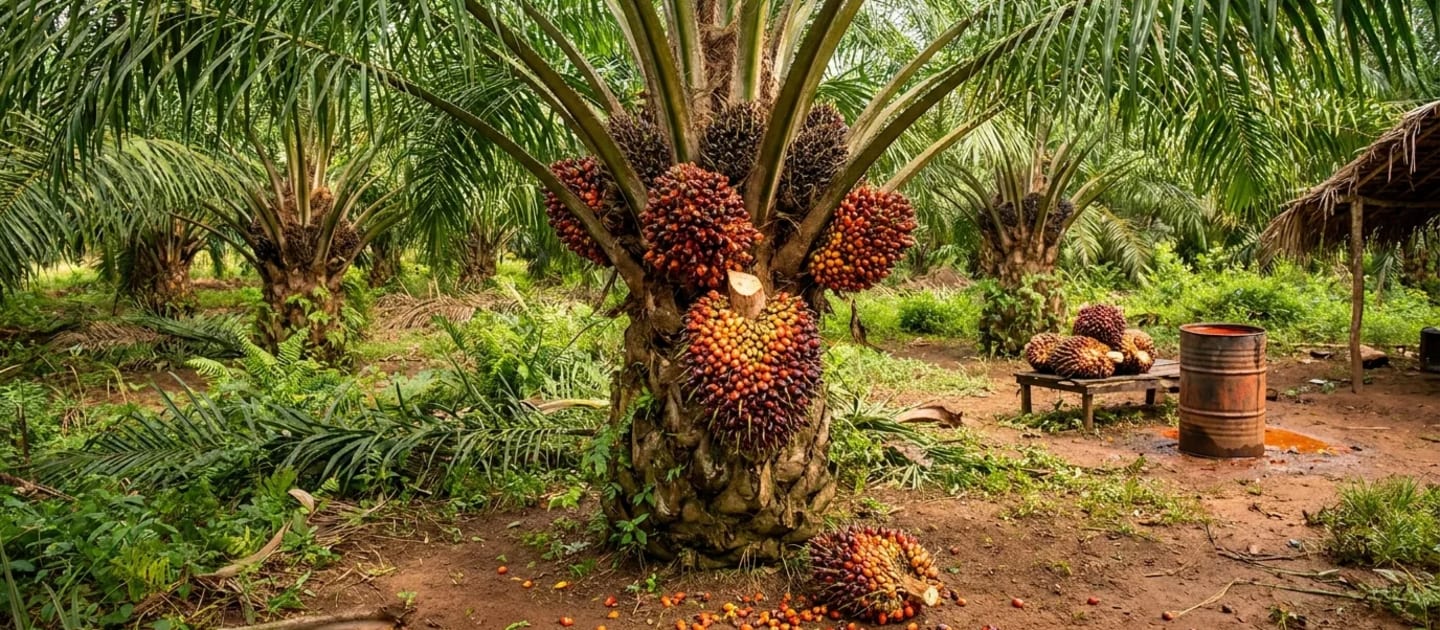
Oil palm grows through the forest belt of the south-east and south-south, including Imo, Abia, Akwa Ibom, Cross River, Rivers, Delta and Edo states, with production also in Ondo and Ogun states. Most of it comes from semi-wild groves and smallholdings rather than large plantations.
History of exploitation
Palm oil was traded locally for cooking and lighting for centuries. Export grew rapidly in the nineteenth century as European demand for industrial oils rose and the Atlantic trade in enslaved people gave way to trade in commodities, a shift that reorganised the delta ports and the middlemen who controlled them. Kernel and oil exports continued through colonial rule, handled by marketing boards from the 1940s, and plantation and research stations were established in the south-east in the mid-twentieth century.
Economic role
Palm produce was Nigeria's leading export for much of the nineteenth century and remained a major earner until oil displaced agricultural exports in the late 1960s and 1970s. It is now largely a domestic food industry, and no current figures are given here.
Environmental and social impact
Expansion of oil palm has come at the cost of forest in parts of the south, and newer large-scale plantation development has raised disputes over community land. Smallholder processing is labour-intensive, much of it done by women, and effluent from mills affects local streams where it is not managed.
Connected history and people
The palm oil trade sits at the centre of the nineteenth-century commercial history covered in trans-Saharan and Atlantic trade, and the coastal trading houses it enriched shaped several of the traditional institutions of the delta.